




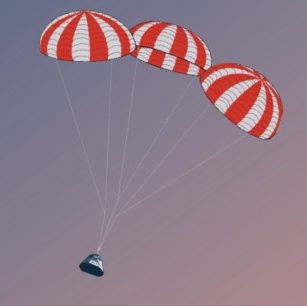


































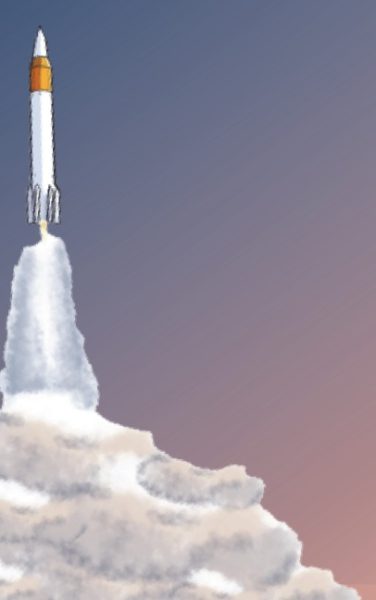
The National Aeronautics and Space Administration sent four astronauts around the moon, on a mission named after the Greek moon goddess, in a ship named for her lover. The crew of the Artemis II mission boarded their ship, Orion, and launched on April 1, 2026. They then orbited the moon and returned home safely on April 10.
Aerospace Engineering teacher Christopher Sjolander was among the many watching as the crew journeyed further from the earth than any humans have ever been.
“Artemis II is a manned mission to fly around the moon to test the systems and equipment that NASA is going to use to land on the moon in future missions,” Sjolander said. “Space exploration has always been important for humans, and just expanding our reach out into the universe is going to be very important to the human species … the moon is the next place we need to go so that we can get to Mars … the current plan is that future plans to go to Mars are going to be launched from the moon.”
Junior Sarah Sullivan has been fascinated with space travel for years, and the Artemis II mission stands out as the first mission beyond low Earth orbit since 1972.
“I think that they chose a really good group of people … because in the original like moon missions, they used a lot of people who were very similar, you know, American men. And in this case, I think they diversified a lot, which … was a good thing, so they could be able to play to their different strengths,” Sullivan said. “I think that’s part of why the morale was so high about it, because it was such a unique opportunity … the first African American to the moon, the first woman to the moon, first Canadian to the moon. And I think that really … encouraged them to, you know, be able to do their best and work seamlessly together.”
During the 1969 moon landing mission, women were unable to become astronauts, and were not allowed to be a part of Mission Control. In the Artemis II mission, Mission Control was primarily made up of women, and Mission Specialist Christina Koch became the first woman to travel beyond low Earth orbit, and to the moon.
“It means everything to me,” Sullivan said. “I remember when I was younger, whenever we went to space camp … I would see a lot of guys there and not a lot of women. And I also remember when I was younger, I would always be … sad that I wouldn’t be able to go into my STEM-related [field], because I thought that if I was a woman, I wouldn’t be able to do it. But knowing now that we were able to send a woman to the moon, even if it didn’t land on it, and that she not only did a lot of the repair jobs on the spacecraft, but was a large part in like, making sure everything worked and operated perfectly, means a lot to me, and I think it is it’ll inspire … future generations of women to pursue their science dreams, even if society tends to tell them they shouldn’t do it.”
While Artemis II only orbited the moon, allowing its crew to be the first humans ever to see its far side, the long term goals of the Artemis missions will be far loftier.
“This is similar to the Apollo missions. I think the Apollo missions certainly lacked the technology that we have now to do more, lift more, take more equipment and prepare for colonization of the moon. By colonization, I don’t mean we’re going to be setting up giant cities, but we’re going to be setting up labs and facilities for people to live in and habitate in while they do research and things like that,” Sjolander said.
Viewing their planet from far beyond its safety, the crew reported being struck with awe. Pilot Victor Glover noted that, “from up here, you also look like one thing. Homo sapiens, all of us, no matter where you’re from or what you look like, we’re all one people,” a sentiment that resonated with Sullivan.
“I think it’s a really important thing to view everyone as human … and having something you can say everyone achieved … The United States doesn’t just benefit from this, because the future implications, what we’ll be able to do with this technology and these missions, is a future that can be seen for all of humanity. And I think that it’s a good reminder of our … common nature and how we’re not that different. And we all want to see the stars. We all want to go to space. And even though we might not be able to all achieve that, we can still live and experience that through the common experience of the astronauts, because in that kind of way they represent everybody,” Sullivan said.
The next Artemis mission is set to launch in mid-2027, about a year after the Artemis II’s record-breaking achievements. After a 50-year hiatus on deep space travel, humanity is once again reaching into the cosmos.
“It is the last great frontier,” Sjolander said. “Everything [on] this planet, at one point, was in space somehow, before the planet formed … it was out there. I think it’s just, it’s naturally fascinating. I think that there’s a ton of things we can learn. At some point in the distant future, the earth probably won’t be habitable for the billions of people. So we … need to expand our reach, our presence. I think people are just genuinely interested in that … they see it as a great adventure. Science fiction is now … nonfiction, right now.”