































Lunch has been served in Wando since it was first opened in 1973, and has continued to be provided throughout the years. The school staff works diligently to offer multiple options for students and is open minded to their different conditions and preferences. Despite their efforts, both negative as well as positive views have emerged from different perspectives.
Jackie Roper, a manager for the lunch staff who has worked for Wando for five years, goes through a long process to deliver lunches to the students.
“First, we have a district dietitian that looks through the menu, and goes by the dietary supplement per week,” Roper said. “They tell us what we need to order, as well as the company of where to get it from, and even how much we’ll order and serve, before I finally go ahead and make the order.”
Her experience in the industry has changed her since she was a graduate student at Wando.
“Being inside of the school, you never really know the background of it,” Roper said. “And now since I’m working here, it’s easier to see the background of what my own lunch ladies went through. It’s really a learning experience.”
Shelli Boris, Roper’s co-manager, also finds herself learning more about Wando and the food industry as a whole.
“Working in the kitchen, baking from scratch, utilizing different ways to make use of your ingredients, it’s an eye opener for anybody who would like to be in the food industry,” Boris said. “I had to learn how to do so many different things with the options that I had, and what I was allowed to have. It really makes you realize how you can experiment with food, ingredients and different options for the children.”
Boris hopes that her hard work only makes a positive impact on the students that she serves it to.
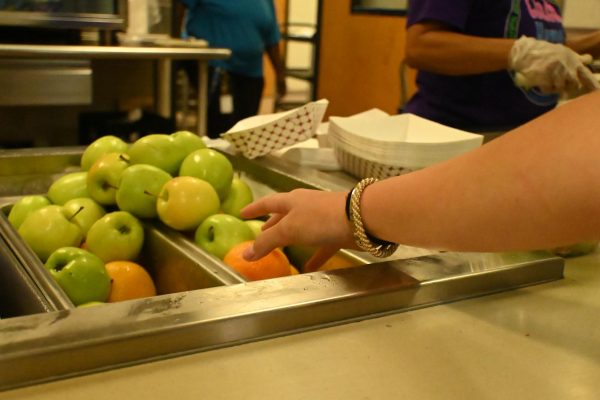
“I want them to enjoy their food, and want to come to lunch,” Boris said. “I want them to feel full, and get a lot of choices of what they want to eat.”
Despite Roper and Boris’ hard work, several people have noticed issues in the way that the school distributes food, with some of the waste, and the lack of vegetarian options in each meal.
Junior Aurelia Boyce, was raised as a pescetarian by her mom, understands the struggle that vegetarians have to find sustaining food.
“It’s hard, since I only eat seafood a little of the time, and it’s the only type of meat that I do eat,” Boyce said. “So I know the struggles of not getting enough protein and nutrients from other foods, and having to shape a diet around that.”
Her experiences stress Wando’s lack of vegetarian options.
“I usually have to take lunches from home, since most schools, like Wando, often don’t serve vegetarian things,” Boyce said. “If I ate here, I most likely won’t be able to find something to even eat.”
However, Wando’s managers do have a reason for their seemingly bleak menu for vegetarians.
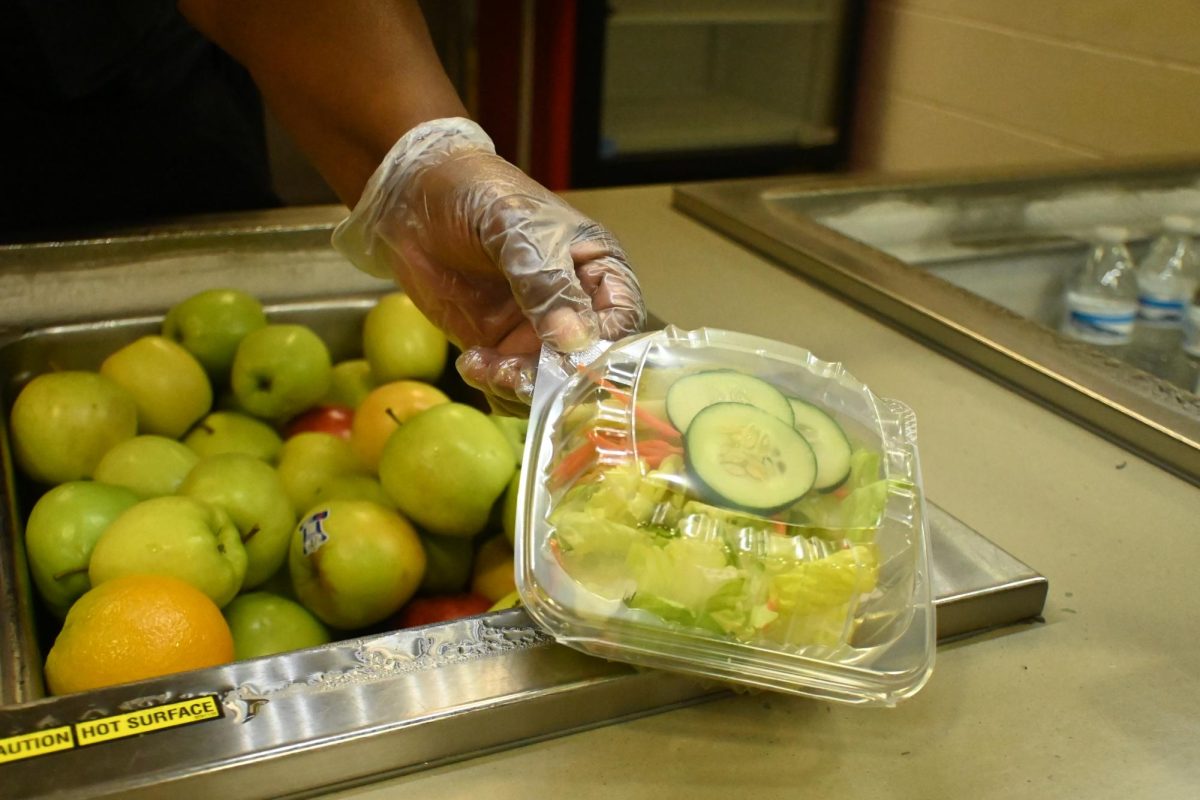
“There are salads, vegetables and fruits of the day in each line,” Boris said. “The issue is that whenever we made vegetarian wraps and things of the sort, kids never picked them up, and we were forced to throw them away.”
The opposing perspectives on Wando’s school lunch demonstrate that there are deeper reasons and motives for everybody within the school. Although some vegetarians struggle to find sustaining options, the lunch ladies also struggle to find the right ways to engage the students without wasting food.
“Everything we do is really for the kids,” Boris said. “It’s my favorite part, coming up with solutions to our problems and providing them a good lunch to eat.”