



























On 14th century Italian streets, the rebirth of the world began. Literature, art, music, philosophy, science and language hung thick in the air. A man could be anything—and everything—he desired.
The Renaissance swept through the middle classes of Europe with a ferocity that left traditionalists reeling. Scientific theories of heliocentrism, anatomy and gravity fought against dogmas of the past. Social thought encouraged individuality and education: a goal of gaining experience in as many intellectual pursuits as possible.
Thus, the Renaissance Man was born. A person of art and science and philosophy and anything else they wished to be. A type of person that is now extinct in the Age of Information.
In theory, the environment of the modern day is one in which the Renaissance Man should thrive. The information presented on the Internet allows self-education in nearly any topic imaginable. World literacy rates are at an all-time high, and mechanizations of everyday activities like laundry and transportation leave humanity with more free time than ever before.
In past eras, free time and literacy were the perfect ingredients for a well-educated and well-rounded man of culture. Now, this potential is not limited to only men. Women have clawed their way to an almost-equality, and this means that the second half of the population can become “Renaissance Men” in their own right.
Logically, it would make sense for as much of the modern population as possible to pursue the well-roundedness that the Renaissance Men valued so much. We have the access, and we have the time, but we somehow do not have the desire.
Technology provides endless entertainment for the idle mind. In the modern man’s free time, instead of turning to intellectual pursuits, he turns to mindless scrolling or bingeable television. We hold a wealth of information in our palm, but choose the path of the ignorant instead.
This is the simple choice that holds us back from being unique and multi-talented individuals. However, there is also a societal component to be considered when it comes to the decline of the Renaissance Man.
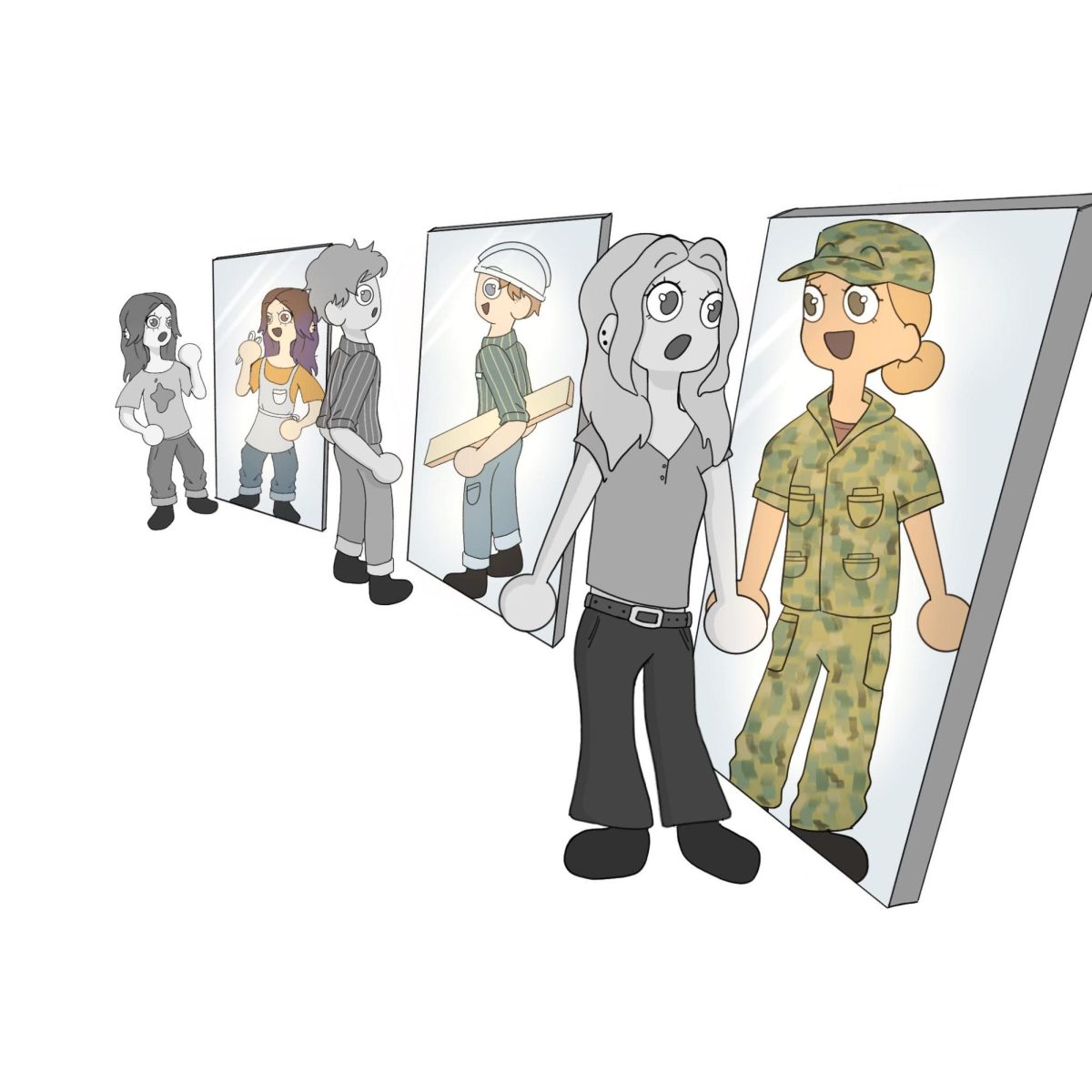
From a young age, children are labelled as “school smart” or “artistically smart” or “socially smart.” There is little to no crossover between these neatly-drawn categories, leaving students with their path set before them.
A girl who is good at math doesn’t join the band so she can study. A boy in choir doesn’t learn a language because he doesn’t have time. A high school senior has to declare their college major, defining their future career, choosing between STEM and humanities.
It is too much to want to change the technological world, train as an athlete, have artistic passion, be bilingual and reach self-fulfillment. You must pick one.
Society says, ignore the examples of the long-forgotten past. Forget that da Vinci painted the Mona Lisa and designed the early helicopter. Forget that Plato said the ideal citizen was both a scholar and an athlete.
Society says, do not waste potential by choosing too many paths.
This mentality is a dangerous limitation on what modern humanity could be. Combinations like a mathematician singer, an athlete politician and a polylingual scientist should not be rarities: they should be standards. We, as a society, should aim to be well-rounded, well-educated people.
To be a modern-day Renaissance Man is not an exceptionally difficult task. It is, however, something that would require effort from individuals and unity between seemingly opposite types of education: two things that modern society is seemingly averse to.
On 14th century streets, a man could be anything, so he became everything. On 21st century highways, anyone could be anything, but still, we do nothing.
