



























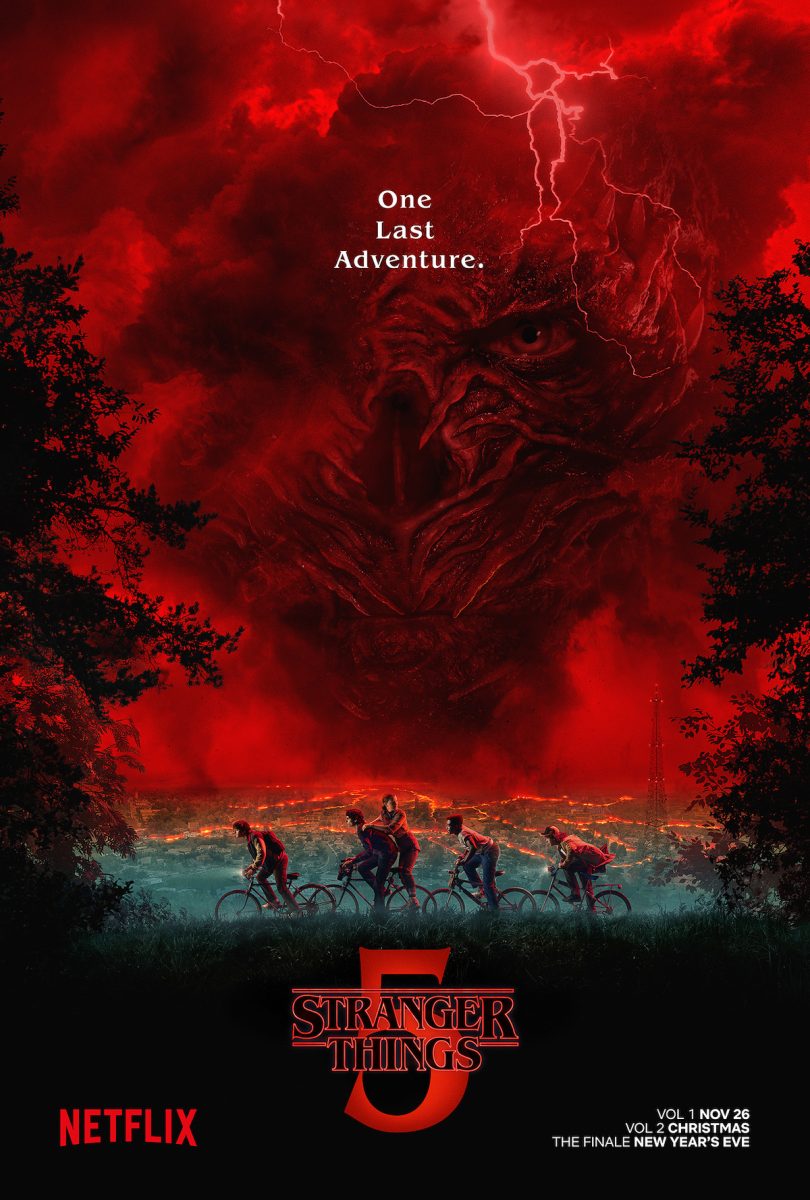
In late November, volume one of the fifth and final season of “Stranger Things” released to near universal acclaim. Three years after the previous season, the Netflix series returned with four episodes dropping at once. Despite this, hype and discussions around the show have halted only two weeks after its release, and this is mostly due to the decisions of Netflix and the creators’ decisions in the distribution of the show.
Just to get it out of the way, the actual quality of the season is the show at its best. Bringing the core group back together was essential for the final season, although they get split into groups in the latter episodes, with half of them being sent to the alternate dimension of the Upside Down. However, every plot line is cohesive enough for the viewer to accept the split, which is different from last season when the group was split for a majority of the season. Everything else is what fans have come to expect, with some twists to keep it interesting, including a great fourth episode (although it is extremely similar to “Harry Potter.” Like, really extremely similar).
So if the season is great, what’s the problem? It comes from a fundamental problem with Netflix’s content strategy.
Netflix, since its inception, has released its shows as single drops. Every episode at once, and at the time it looked like an incredible strategy and birthed the term “binge-watching.” Since that time, things have changed and more entities have entered the market. These new players have stuck with weekly release strategies. And, in my opinion, it’s just better.
If Netflix wants these shows to dominate the conversation, they need to change this release schedule. Releasing weekly allows more people to watch immediately and join in discussions about it. Dropping four hour and a half episodes leaves most people in a rush to watch them all and leads to less time for each episode to marinate in the minds of the viewer. It also gives the show more of a continuous dominance over pop culture instead of what it only has for a week every month as currently presented.
This isn’t the only problem. Waiting three full years between seasons just isn’t right. These shows are expensive, and releasing a season a year isn’t possible, fair. But what also isn’t fair is these huge gaps between episodes. It allows the audience time to completely forget the proceeding season, to where the payoffs taking place in this one fall flat unless they had rewatched it three years later.
Another problem that this creates is the age differences with the cast. Millie Bobby Brown filmed the first season at 12 years old, and she’s currently 21. In a show that’s meant to take place over a few years, it’s just another weird and totally avoidable oddity to add to the increasing list with this show.
While season five is as good as the show has ever been, there are problems that are hard to ignore. While they are nitpicks, with a show this special it deserves more than to be nitpicked, especially with things as preventable as these are. And with Netflix buying Warner Bros., it looks as though these problems will continue to plague shows like “Stranger Things.”